

A sharara can make you feel like royalty—or leave you tugging at the fabric all night. The difference? Fit. This Sharara Fit Guide breaks down exactly how to choose, measure, and tailor a sharara that flatters your body type, whether you're curvy, petite, tall, or athletic.
In India, where festive wear is worn for weddings, Eid, Diwali, receptions, and more, the sharara has become a modern classic. But here's the trick: even the most expensive sharara can fall flat if the fit is wrong. Let's fix that.
What Is a Sharara and Why Fit Matters So Much
A sharara is a traditional flared trouser outfit, typically paired with a kurta and dupatta. Unlike palazzos or ghararas, shararas are cut straight from the waist and flare dramatically from the hips or thighs.
- The heavy flare exaggerates poor tailoring.
- Incorrect waist or hip measurements cause awkward pulling.
- The hem length affects how "grand" the silhouette looks.
A well-fitted sharara:
- Balances your proportions
- Enhances movement and comfort
- Looks polished in photos and real life
Poor fit, on the other hand, can make even the most beautiful embroidery look bulky or sloppy.
Understanding Sharara Silhouettes & Fabrics
Before measuring, you'll want to understand the two main design variables: cut and fabric.
Popular Sharara Cuts
Best Fabrics for Fit
- Georgette & chiffon: Flowing, forgiving, perfect for movement
- Silk & brocade: Structured, luxurious, but less forgiving
- Crepe: Lightweight with a controlled fall
- Velvet: Heavy, best for winter weddings
Pro tip: If you're between sizes, choose a softer fabric—it's easier to tailor and more forgiving on curves.


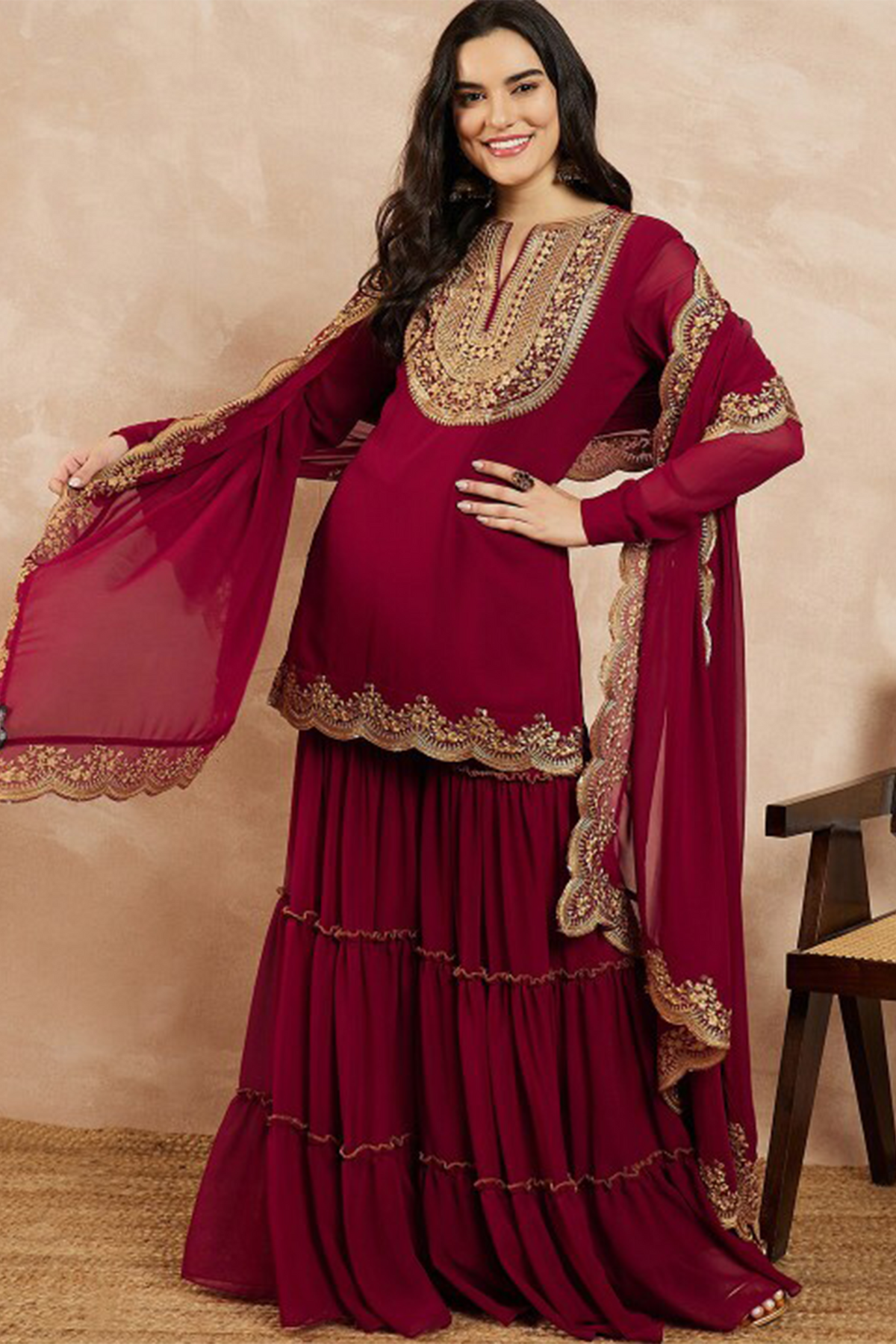
Sharara Fit Guide by Body Type (What Flatters Most)
This is where most people get stuck. Let's simplify it.
Pear-Shaped Body
(Hips wider than shoulders)
- Choose high-waist shararas
- Opt for lighter fabrics on the bottom
- Pair with embellished or structured kurtas
Avoid: Excessively heavy flare starting at the thigh.
Apple-Shaped Body
(Fuller midsection)
- Go for mid-rise shararas
- Choose flowy, non-clinging fabrics
- Straight-cut kurtas work best
Avoid: Tight waistbands and stiff brocade.
Hourglass Body
(Balanced bust and hips)
- High-waist, panelled shararas look stunning
- Belted kurtas enhance curves beautifully
Avoid: Boxy kurta cuts that hide your natural shape.
Petite Body Type
(Shorter height)
- Choose high-waist shararas
- Stick to medium flare
- Keep embroidery vertical
Avoid: Oversized flare and heavy borders at the hem.
Tall & Lean Body Type
- Low- or mid-rise shararas work well
- Heavy flares and bold prints look balanced
Avoid: Extremely narrow silhouettes that look underwhelming.
How to Measure for a Perfect Sharara Fit (Step-by-Step)
This is the backbone of the entire Sharara Fit Guide. Don't guess—measure.
- Soft measuring tape
- Fitted clothing
- A mirror or helper
- Waist: Measure at your natural waist (don't suck in).
- High Hip: 3–4 inches below waist.
- Full Hip: Widest part of your hips.
- Thigh Circumference: Especially important for fitted tops.
- Sharara Length: Waist to floor, barefoot or with heels in mind.
Always add 1–1.5 inches of ease for comfort, especially for seated events like weddings.
Tailoring Your Sharara: Where Most Fits Go Wrong
Even readymade shararas usually need alterations. Tailoring is not optional—it's essential.
Key Areas That Need Alteration
- Waistband tightening or loosening
- Hip flare balance
- Hem length (most commonly overlooked)
- Lining adjustment
Always attend the first fitting wearing the footwear you'll wear at the event.
The "Test Sit" Rule
Before finalizing your tailoring:
- Sit down
- Walk
- Climb a step
If the waistband digs in or fabric pulls at the thighs, ask for adjustments immediately.
Real-World Example: How One Small Alteration Changed Everything
Last wedding season, a client (let's call her Anjali) bought a stunning blush sharara online. On the hanger, it looked perfect. On her body? The waistband pinched, and the flare started too high, making her hips look bulky.
We:
- Lowered the flare start by 1.5 inches
- Relaxed the waist by ¾ inch
- Shortened the hem for heels
The result? Same outfit, completely new silhouette. That's the power of tailoring done right.
Styling Tricks That Instantly Improve Sharara Fit
Good styling can visually correct minor fit issues.
- Heels or wedges: Add height and balance flare
- Dupatta drape vertically: Slims the frame
- Monochrome sets: Create uninterrupted length
- V-neck kurtas: Elongate the torso
If your sharara feels bulky, switch from flat juttis to 2–3 inch heels—it changes the entire balance.
Shopping Smart: Readymade vs Custom Sharara
- Faster delivery
- Lower cost
- Easy returns
- Perfect fit from day one
- Personalized fabric & flare
- Ideal for weddings and bridal wear
If you're buying ready-to-wear, stick to brands with detailed size charts and return policies.
Common Sharara Fit Mistakes (And How to Avoid Them)
- Too tight at the waist: Causes discomfort and creasing
- Too short hem: Breaks the regal fall
- Over-flared bottoms: Overpower petite frames
- Wrong fabric weight: Causes sagging or stiffness
A sharara should skim your body, not cling or drown it.
Care & Longevity: Keep the Fit Looking New
- Dry clean heavy shararas
- Hang using padded hangers
- Store with muslin cloth
- Never fold along the flare
Good maintenance preserves the original drape and fit for years.
Your Perfect Sharara Is All About Smart Fit
The right sharara doesn't just fit your waist—it fits your personality, proportions, and purpose. When you understand your body type, take proper measurements, and prioritize good tailoring, you stop adjusting your outfit and start enjoying the celebration.
Ready to find your perfect fit? Use this Sharara Fit Guide before your next festive or wedding purchase—and walk in with confidence.
FAQs
FAQ 1: How tight should a sharara waistband be?
It should sit snug without digging in—comfort is key, especially for long events.
FAQ 2: Can petite women wear heavy shararas?
Yes, but with controlled flare and high-waist tailoring.
FAQ 3: Is sharara better than palazzo for weddings?
Sharara offers a more regal, festive look compared to casual palazzos.
FAQ 4: How long should a sharara be?
It should lightly touch the floor when wearing your event footwear.
FAQ 5: Can shararas be altered later?
Yes, most can be resized at the waist and hem if fabric allowance exists.


